Why Customer Experience is the New Competitive Advantage in eCommerce
Introduction
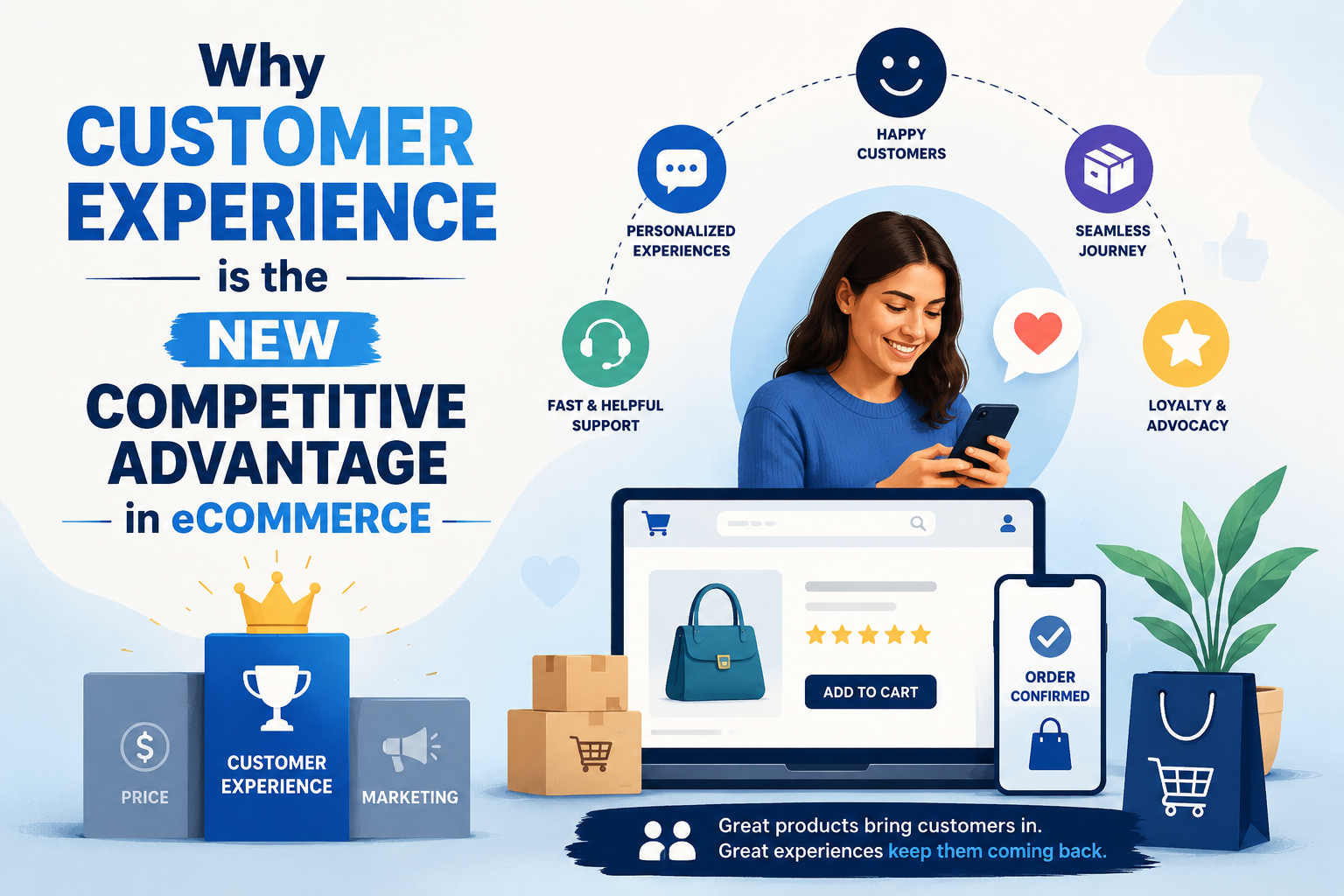
In the rapidly evolving world of eCommerce, businesses are no longer competing solely on price or product selection. Today, customer experience (CX) has emerged as one of the most important factors influencing purchasing decisions, brand loyalty, and long-term business growth.
Consumers have countless options available at their fingertips. If an online store fails to provide a seamless, enjoyable, and personalized shopping experience, customers can quickly move to a competitor. As a result, businesses that prioritize customer experience are better positioned to attract, retain, and delight their customers.
What is Customer Experience in eCommerce?
Customer experience refers to every interaction a customer has with an online brand throughout their buying journey. This includes:
- Website navigation
- Product discovery
- Checkout process
- Payment options
- Order fulfillment
- Customer support
- Returns and refunds
- Post-purchase engagement
Each touchpoint contributes to the customer’s overall perception of a brand.
Why Customer Experience Matters
Increased Customer Loyalty
Satisfied customers are more likely to return for future purchases. A positive shopping experience builds trust and encourages repeat business, reducing customer acquisition costs over time.
Higher Conversion Rates
An intuitive website, clear product information, and a frictionless checkout process help convert visitors into paying customers. Even small improvements in user experience can significantly impact conversion rates.
Positive Word-of-Mouth Marketing
Happy customers often share their experiences with friends, family, and social media followers. This organic promotion can generate valuable referrals and increase brand awareness.
Competitive Differentiation
Many online stores sell similar products. Exceptional customer experience allows businesses to stand out in crowded markets and create meaningful relationships with customers.
Key Elements of an Exceptional eCommerce Experience
Fast and Responsive Website Performance
Website speed directly impacts customer satisfaction. Studies consistently show that users expect pages to load within seconds, and delays often result in abandoned sessions.
Businesses should focus on:
- Optimizing images
- Using content delivery networks (CDNs)
- Minimizing unnecessary scripts
- Implementing efficient hosting solutions
Personalized Shopping Experiences
Modern consumers appreciate personalized recommendations and relevant content. By leveraging customer data and analytics, businesses can offer:
- Product recommendations
- Personalized promotions
- Customized email campaigns
- Tailored shopping experiences
Personalization helps customers find products faster while increasing average order values.
Simplified Checkout Process
Complex checkout procedures are among the leading causes of cart abandonment. A streamlined checkout should include:
- Guest checkout options
- Multiple payment methods
- Clear shipping information
- Minimal form fields
- Mobile-friendly design
Reducing friction during checkout can significantly improve sales performance.
Mobile Optimization
With mobile shopping continuing to grow, businesses must ensure their websites perform flawlessly across smartphones and tablets.
A mobile-friendly experience includes:
- Responsive design
- Fast-loading pages
- Easy navigation
- Mobile payment integration
- Touch-friendly interfaces
Transparent Communication
Customers value clear communication throughout the purchasing journey. Businesses should provide:
- Order confirmations
- Shipping updates
- Delivery tracking
- Customer support accessibility
Proactive communication helps build trust and reduce customer anxiety.
The Role of Customer Support
Outstanding customer support remains a critical component of eCommerce success.
Businesses can improve support through:
- Live chat functionality
- AI-powered chatbots
- Comprehensive FAQs
- Multiple communication channels
- Fast response times
When issues arise, prompt and effective support can turn a negative experience into a positive one.
Measuring Customer Experience Success
Organizations should regularly monitor key performance indicators (KPIs), including:
- Customer Satisfaction Score (CSAT)
- Net Promoter Score (NPS)
- Customer Retention Rate
- Cart Abandonment Rate
- Average Order Value
- Customer Lifetime Value
These metrics provide valuable insights into customer perceptions and areas for improvement.
Future Trends in Customer Experience
The future of eCommerce customer experience will be shaped by technologies such as:
Artificial Intelligence
AI will continue to deliver smarter recommendations, predictive support, and personalized shopping journeys.
Augmented Reality (AR)
AR technology allows customers to visualize products before purchasing, helping reduce uncertainty and return rates.
Voice Commerce
As voice assistants become more sophisticated, voice-enabled shopping experiences will gain popularity.
Hyper-Personalization
Advanced analytics and machine learning will enable businesses to create highly individualized customer interactions at scale.
Conclusion
Customer experience has become one of the most powerful drivers of eCommerce success. Businesses that invest in fast, personalized, and seamless shopping experiences are more likely to build customer loyalty, increase conversions, and achieve sustainable growth.
As competition continues to intensify, delivering exceptional customer experiences will no longer be a differentiator—it will be a necessity. Companies that place customers at the center of their eCommerce strategy will be best positioned to thrive in the digital economy.